• Skip to primary navigation
  • Skip to content
  • Skip to primary sidebar

ReleaseRelease

  • Home
  • News Releases
  • Ask a Question
  • Eval Notifications
    • FAQs
  • Computer Asset Survey
  • Sean Response
  • Taxonomies Test
    • Taxonomies Test with Parent
  • Dynamic Incident Template test

Autoimported

Aging Life Care Managers Can Be a ‘Godsend’ for Families

October 14, 2026

Kristin Martinelli began her workday at 7:30 a.m. on a recent Monday, completing an online Medicaid recertification form for a client in a nursing home in Austin, Texas.

Next, she drove to meet an 85-year-old and her daughter, who had come in from out of town. The older woman had “pretty advanced dementia” and was scheduled to move into the secure memory care unit of a senior living facility that day, said Martinelli, who works as an aging life care manager with Mir Care Consultants in Central Texas. The three of them had a 9 a.m. meeting with the primary care doctor who would complete the paperwork for the move.

At the meeting, Martinelli explained the situation, and the doctor said he’d fill in the patient’s forms that afternoon. But later in the day, she got a call from a colleague saying that the doctor wouldn’t be able to complete the forms that day after all. That created a scramble because the woman wasn’t safe alone in her house. Martinelli ended up calling a home care agency she trusted. “I begged them to provide me with a caregiver in the next four hours,” she said.

If a combination of appointments, bureaucracy, vigilance, and worry about a vulnerable older person – often interspersed with medical emergencies – sounds familiar, it might help to know about a service its providers ruefully call the best-kept secret in eldercare.

Independent certified professionals like Martinelli used to be known as geriatric care managers. That’s what I called the people who helped my 88-year-old father make the 125-mile move from his apartment to a continuing care community near me, and later helped my disabled sister transition from her home to an assisted living facility.

I also used words like “godsend” and “indispensable.” After the moves, the care managers kept tabs on both my father and sister monthly and eased my fears that something urgent might strike the moment I left on a vacation or a work trip.

About a decade ago, these experts rebranded themselves as aging life care managers. It usually takes a couple of years to become one. Most enter the profession as nurses or social workers; some are physical or occupational therapists or gerontologists. They must attain a required combination of advanced education and supervised experience before they can take the certification exam.

The Aging Life Care Association, the nonprofit that represents these professionals, was founded in the 1980s and has grown to more than 2,000 members, but care managers still have a persistent public awareness problem.

“When we talk to someone, they say, ‘I wish I could have called you six months ago, but I didn’t know you existed,'” said Susy Elder Murphy, who owns Aging Well Eldercare, a large practice serving Washington, D.C., and its Maryland suburbs.

The caller is typically an adult child, the Aging Life Care Association has reported. Martinelli described a common scenario: “Mom is in the hospital, or the children went to visit and hadn’t realized she was so sick. They’re in a crisis.”

Enter the aging life care manager. What distinguishes her (it is usually a woman) from people with confusingly similar names – senior care advisers, patient advocates, care navigators – is her independence.

Aging life care managers work for the client and the family paying them, not for hospitals or insurance companies. Moreover, the association’s extensive code of ethics specifically prohibits “accepting or giving referral fees, fee splitting, kickbacks or other similar arrangements in exchange for client referrals.”

Contrast that with companies that promise free advice on senior living, like A Place for Mom. Care facilities pay A Place for Mom fees for steering new residents their way, as the organization discloses on its website. Advisers for companies that receive fees may be unlikely to recommend places that don’t pay, or to recommend home care, unless the company also contracts with local agencies.

“They’re really marketers, salespeople,” Julie Wagner, chief executive of the Aging Life Care Association, said about the referral companies. Some companies are more transparent than others about these financial incentives.

“If you want to buy a car and you go to the Ford dealer, they will not say, ‘I really see you in a Subaru,'” Murphy said. “You should be talking to someone who’s objective, neutral, and experienced.”

Care managers don’t come cheap. Wagner said association members’ hourly rates range from $150 to $350, with big geographic variations. In Texas, Mir’s standard rate is $185 an hour, billed in 15-minute increments. In Washington, Murphy’s practice charges $210 an hour. Sometimes families share the cost, as my sister and I did. And in some cities, social service agencies provide these specialists on a sliding scale.

Aging life care managers serve as coordinators, not hands-on caregivers, and the range of services they provide is quite broad.

They can, for example: Arrange and oversee a move to or within a senior living facility. Deal with insurers, including Medicare and Medicaid. Drive a client to the dentist. Recommend not only local residential communities and home care agencies but elder law lawyers, medical specialists, therapists, senior move managers, and hospice organizations. Visit weekly or monthly to see that everything is going smoothly. Alert family members if it isn’t.

“A part of our job is mediating between family members, acting as a sounding board,” Martinelli said.

In fact, care managers like Murphy find their clients often seem more willing to listen to them than to their adult children – even if the advice is the same. “Your mom didn’t change our diapers or teach us to talk,” she said. “It’s a different relationship.”

In a 2025 survey of clients and families commissioned by the Aging Life Care Association, “the responses were overwhelmingly positive,” said Jullie Gray, a co-author of the study who teaches at the University of Washington School of Social Work.

The nearly 200 respondents did not constitute a representative national sample, Gray said. But 93% said the benefits of hiring an aging life care manager outweighed the costs, and 99% said they would recommend such a manager to someone else. The survey’s findings were presented at the 2025 meeting of the Gerontological Society of America.

Jeffrey Bernstein, an engineer in Middleton, Massachusetts, has for years relied on Aging Well Eldercare for help with his parents, two older siblings, and an aunt, all in Maryland. Like many people who eventually learn about care managers, “I had no idea such a person existed,” he said, until his wife read about them in a magazine.

Bernstein, 65, was unable to relocate to care for his family directly. But with care managers, “when something came up, they were there, they stepped up,” he said. “More importantly, they knew what to do when I wouldn’t have. It was tremendously helpful for my peace of mind.”

The same was true with Martinelli’s 85-year-old client in Austin. She spent the night with temporary caregivers and moved into her new home in the memory care unit that Tuesday, after her doctor finally produced the necessary documentation. “She went in just before noon,” Martinelli reported. “She had lunch.”

How was the new resident adjusting? “It’s been OK,” Martinelli said, sounding relieved. “So far, so good.”

The New Old Age is produced through a partnership with The New York Times.

KFF Health News is a national newsroom that produces in-depth journalism about health issues and is one of the core operating programs at KFF-an independent source of health policy research, polling, and journalism. Learn more about KFF.

This article first appeared on KFF Health News and is republished here under a Creative Commons Attribution-NonCommercial-NoDerivatives 4.0 International License.

To Afford Aging in Place, Older Adults Turn to ‘Golden Girls’ Housing

July 24, 2026

Shirley Jennett, a retired nurse, loves her spacious ranch-style house in Denver, with its big backyard and gazebo.

“I want to stay here,” she vowed. “And die here.”

She might pull that off. In relatively good health, Jennett still drives to lunch with friends, does her own housekeeping and grocery shopping, and plows through a book a day, usually a mystery. But her children worry about her living alone at 89, especially after she has had a couple of falls.

Enter her new housemate, Susan Beese. Despite working four days a week in retail, Beese could no longer afford her nearby one-bedroom apartment as the rent topped $1,500 a month. She moved out, first staying with friends and then in what she delicately called “a senior women’s facility.”

Now Beese, who is 79, pays Jennett $800 monthly for a bright two-bedroom space, with a bath and a kitchen, on the lower level of her house. As part of the agreement the housemates worked out, she helps plant and water Jennett’s garden, takes out the trash, and cooks occasional meals.

“It’s been a lifesaver,” Beese said. Jennett even welcomed her dog.

Meet the real-life Golden Girls. In the much-loved 1980s sitcom, still in perpetual reruns, the four wisecracking women who share a house in Miami met through an ad on a supermarket bulletin board.

In Denver, the housing matchmaker was Sunshine Home Share Colorado, a local nonprofit that Alison Joucovsky, a senior services administrator, founded in 2016 when the problem became urgent. “My phone was ringing off the hook,” she said, recalling anxious pleas from older residents spending most of their Social Security checks on rising rent or facing years-long waiting lists for subsidized senior housing.

Home sharing “is a really efficient way to create affordable housing and to support older people who want to age in place,” Joucovsky said. Carefully vetting both “home providers,” who may be rattling around in family houses now too big and too empty, and “home sharers” seeking reasonable rents, Sunshine facilitated 31 shares last year, a record for the nonprofit.

“The cost of developing and building new housing is astronomical, and so is the length of time it takes,” said Laura Fanucchi, president of the National Shared Housing Resource Center and an administrator with HIP Housing, a home-share organization in San Mateo County, California. “Why not make use of existing housing stock?”

About 55 organizations around the country offer these services – and demand is growing, driven by housing shortages, rising rents, and sales prices that affect both the old and the young. Legislators in several states are working to promote home sharing as an option. (Personal care is not part of these arrangements.)

The need is acute. About a third of households headed by someone 65 or older were “cost-burdened” in 2024, according to an analysis by the Harvard Joint Center for Housing Studies. That means they spent more than 30% of their income on housing.

Although nearly 80% of those people were homeowners, the center found, an increasing proportion are still paying off mortgages or home equity loans, and most contend with higher taxes, utility and maintenance costs, and insurance premiums.

“A lot of the people calling me to complain about property taxes and inflation are senior citizens on fixed incomes whose children have left, and maybe their spouse has died,” said Pennsylvania state Rep. Abby Major, a Republican co-sponsor of a bill that would facilitate home sharing. “They’re a single older adult living in a four-bedroom house.”

Yet most don’t want to relocate. Even if they do, many older adults will find that downsizing has also become prohibitively expensive as home prices rise and very low interest rates become a memory.

Younger people are similarly cost-burdened, including 37% of those age 25 to 34 and 31% of those 35 to 44, the Joint Center has reported. Home sharing can benefit both older homeowners who need income and people of any age in search of lower-cost housing.

To help increase their reach, some home-share programs now supplement or replace the traditionally labor-intensive matching process with online platforms. (For-profit companies like Nesterly or roommates.com also facilitate shared housing.)

“It’s like online dating, except that people who have rooms can meet people who need rooms,” said Candice Smith, executive director of HomeShare Oregon. “And it’s a lot more secure.” HomeShare’s online platform has drawn close to 7,000 providers and seekers over five years.

Further support has come from the city of Portland, which this year announced a pilot program to pay $1,000 to homeowners who make a spare room available (or $1,500 for two rooms) through qualified home-share programs.

In addition, legislators in several states have introduced or passed bills that prohibit municipalities from unduly restricting homeowners who want to rent spare rooms to nonfamily members. Sponsors in Pennsylvania and Connecticut actually call them Golden Girls bills, and they’ve drawn bipartisan support.

“So many young people have basically given up on buying a home,” said Colorado state Rep. Manny Rutinel. The Democrat helped pass a 2024 law prohibiting cities and counties from limiting the number of unrelated people who could live together in a single dwelling.

In Pennsylvania, state Rep. Tarik Khan steered a similar bill through the House in June; it awaits a Senate vote. “It doesn’t make sense that your cousin can move in but someone unrelated to you can’t,” said Khan, a Democrat.

The Pennsylvania bill caps the number of nonfamily occupants in a home at five; Connecticut’s limit would be three. That bill passed the Senate in April and then died without a vote in the House. But the bill sponsors plan to reintroduce it next session.

Home sharing can’t solve the housing crisis, its fans acknowledge. But it could make a dent, potentially unlocking thousands of spare bedrooms across the country without requiring new construction that would change the character of neighborhoods.

Admittedly, matching homeowners with those who want to rent a room becomes a delicate process. Home-share staff members typically interview the individual parties, run background checks, verify incomes, coordinate initial phone calls and meetings, and mediate if problems later arise.

They also help applicants sift through the myriad lifestyle preferences that can torpedo a match. “Living together isn’t easy,” Fanucchi said. Will the home provider accept smokers, pets, visitors? Does the sharer work from home? Or need to park a car? Who sets the thermostat?

Sometimes the agreement includes a “service exchange,” in which the newcomer does a few hours of chores like snow shoveling, shopping, or some meal preparation in return for reduced rent.

Jenlyn and Larry Boyer, for instance, have lived in their ranch house in suburban Broomfield, Colorado, for 31 years and never want to leave. But Jenlyn, who is 80, has “gotten unsteady” and uses a walker. Her husband, 70, suffers chronic fibromyalgia pain and needs a wheelchair.

Because they now pay for tasks that they used to undertake themselves, and because inflation has undermined their finances, “I had an epiphany,” Jenlyn said. “We need more help and we need more money.”

Six months ago, through Sunshine Home Share, they met a 46-year-old graduate student whose monthly rent had doubled to an unmanageable $2,000.

The student moved into their furnished downstairs bedroom/family room with a bathroom, a small refrigerator, and a microwave. In exchange for about 10 hours of dishwashing a month, she pays a reduced rent of $600.

The additional income has helped the Boyers cover expenses like van repairs and wheelchair batteries. But they also enjoy chatting with their new housemate.

“She turns out to be just a gem,” Jenlyn said. “We laugh together a lot.”

The New Old Age is produced through a partnership with The New York Times.

KFF Health News is a national newsroom that produces in-depth journalism about health issues and is one of the core operating programs at KFF-an independent source of health policy research, polling, and journalism. Learn more about KFF.

This article first appeared on KFF Health News and is republished here under a Creative Commons Attribution-NonCommercial-NoDerivatives 4.0 International License.
A Shrinking Safety Net

July 23, 2026

A new report finds that participation in the federal food stamp program is down far more than was predicted when the Republican-led Congress approved cuts in 2025. That portends a similar fate for Medicaid, as states ready comparable changes.

Margot Sanger-Katz of The New York Times, Alice Miranda Ollstein of Politico, and Joanne Kenen of the Johns Hopkins Bloomberg School of Public Health and Politico Magazine join KFF Health News’ Julie Rovner to discuss these stories and more.

Also this week, as part of the “How Would You Fix It?” series, Rovner interviews GOP Sen. Bill Cassidy of Louisiana, who chairs the Senate Health, Education, Labor, and Pensions Committee.

Plus, for “extra credit,” the panelists suggest health policy stories they read this week that they think you should read, too:

Julie Rovner: The New York Times’ “The Fake Influencers Selling Wellness on Your Feed,” by Arijeta Lajka, Isabelle Niu, Mark Boyer, James Surdam and Dan T. Peters.

Joanne Kenen: Stat’s “A Most-Wanted Fugitive Appears To Have Been Secretly Working as a Biotech Executive,” by Adam Feuerstein.

Margot Sanger-Katz: NPR’s “Amid Nurse Shortage, a University Rolls Out the Welcome Mat for Men,” by Andrea Hsu.

Alice Miranda Ollstein: Roll Call’s “Trump Administration Puts Kibosh on HIV Prevention Funding,” by Ariel Cohen.

Violence Repeatedly Erupts at Dementia Care Facilities Despite Warnings, Inspections Show

July 20, 2026

Sam Ato Timaloa, a paroled sex offender who also served time for attempted murder, had dementia and an acute intolerance of noise – especially from roommates at Sunrise Post Acute, a nursing home in Banning, California. Over four months in 2025, a state investigative report found, Sunrise switched Timaloa’s room eight times, the last into one occupied by Attilio Cecchetto, 92, a retired tile installer whose dementia led him to frequently moan, mumble, and yell.

Overnight, a nurse aide walked into their room and saw blood splattered on the floor, walls, and ceiling, according to a grand jury transcript. Cecchetto’s face “looked twisted and smashed,” the aide testified. A Banning city police officer testified that Timaloa, 77, told him that he had punched Cecchetto twice.

“He just kept saying that Attilio was being too loud: ‘He talks too much,'” the officer said.

Two men, sitting at a table and wearing hats, smile as their picture is taken
Attilio Cecchetto (right), a retired tile installer pictured with his son Gino, often moaned or yelled, a symptom of his dementia. His California nursing home assigned him a new roommate, a former convict whose dementia made him react strongly to noise, a state report said. (Marco Cecchetto)

Cecchetto died two days later from blunt force facial trauma.

“You get placed in a facility like this to be taken care of, not to be murdered,” one of his sons, Gino Cecchetto, said in an interview. “This was completely preventable at many different points.”

Timaloa pleaded not guilty to assault. The charges were later upgraded to murder, and a judge ordered a mental health evaluation. The judge will rule as early as August on whether Timaloa is competent to stand trial.

PACS Group, the nursing home chain that owns Sunrise, denied negligence. “We strive to provide quality care to everyone we serve, and our hearts continue to go out to the Cecchetto family for their loss,” PACS spokesman Brooks Stevenson said in an email.

In nursing homes primarily occupied by impoverished people as well as posh assisted living facilities that cost upward of $10,000 a month, agitated residents have shoved, punched, bit, and kicked others. They have wielded canes, walkers, pens, a plate, a mop stick, a shoe, a belt buckle, and even the footrests of wheelchairs as weapons, federal inspection reports show.

How often these altercations take place nationwide is unknown, but an in-depth study of 14 assisted living facilities in New York state led by Cornell University researchers estimated 1 in 7 residents experienced aggression within a month, including verbal, physical, or sexual acts. Their separate study of 10 New York state nursing homes estimated 1 in 5 residents experienced an altercation in a month. Researchers have found that these assailants are disproportionately likely to have dementia.

The diseases that cause dementia can impair brain circuits involved in impulse control and threat perception, raising the risk of aggressive behavior. Residents with Alzheimer’s disease and other dementias constitute more than 900,000 of the 2.2 million people living in these settings, many of which include specialized memory care units.

Often, altercations involving a resident with dementia erupt after danger signals are missed or ineffectively addressed, according to a KFF Health News examination of court records, police reports, and state and federal inspection reports.

Since the start of 2024, the federal Centers for Medicare & Medicaid Services has faulted nursing homes at least 700 times for failing to protect residents from physical, sexual, or verbal abuse by other residents, CMS inspection reports show. The federal records do not include assisted living facilities, which are regulated by states.

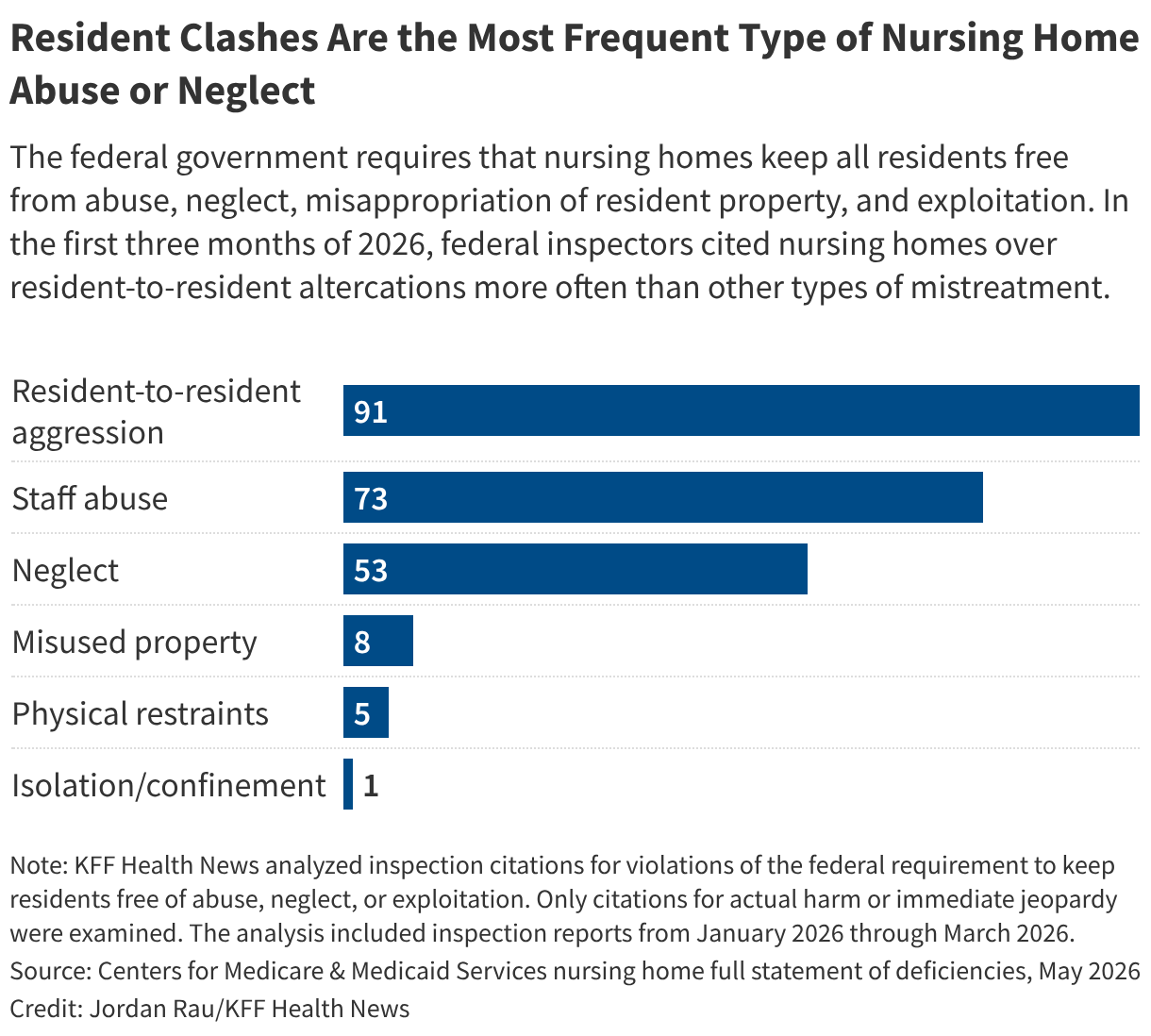
In the first three months of this year, CMS cited nursing homes more often for resident-to-resident abuse than for any other type of abuse, neglect, or exploitation, including abuse by employees, the reports show.

Resident Clashes Are the Most Frequent Type of Nursing Home Abuse or Neglect (Bar Chart)

The long-term care industry says not every clash can be averted. Presbyterian Homes & Services, a nonprofit Christian chain of senior living facilities, said in a statement: “Caring for individuals living with advanced dementia is complex, and behaviors can change in ways that are difficult to fully predict or prevent, even with clinical interventions in place.”

Eilon Caspi, a dementia consultant and researcher who studies resident-on-resident altercations, said that usually there is a specific unmet need that precedes an altercation. “In the vast majority of incidents,” he said, “there are warning signs in the months, weeks, days, hours, and sometimes minutes and seconds prior.”

Fertile Battlegrounds

One psychological theory about Alzheimer’s, the most common dementia disease, holds that as the brain’s networks deteriorate, the balance shifts between the prefrontal cortex, which helps govern judgment and self-control, and limbic regions including the amygdala, which helps process fear and threat responses.

As cognition clouds, people lose the ability to understand what is happening around them and to put distress into words, researchers say. Pain, infection, medication side effects, and other physical and emotional distresses may be expressed through shouting, intimidating gestures, kicking, pushing, or punching. Long-term care facilities can be triggering environments, with intimate care often delivered by a changing stream of aides whom residents can’t recognize. Amid noise, close quarters, and rigid routines, interactions become flash points.

“You don’t feel safe, because you don’t know these strangers who are coming in and taking off your clothes,” said Al Power, a geriatrician and an advocate for alternative models of care for people with cognitive issues. “These things will be distressing to anybody.”

The Cornell researchers found verbal altercations were the most common type of aggressive interaction but estimated 4% of assisted living residents and 5% of nursing home residents in their studies experienced physical assaults in a month.

Another Cornell study found that Connecticut police were called to nursing homes for resident-to-resident clashes more often than allegations of staff abuse, theft, and residents wandering away without supervision combined. A national analysis of survey data from the Centers for Disease Control and Prevention calculated nearly 8% of residents in assisted living facilities engaged in physical aggression or abuse toward other residents or staff members.

Many of the physical aggressions KFF Health News identified in CMS inspection reports were perpetrated by residents with diagnoses of dementia, schizophrenia, or other cognitive disorders. In some physical altercations, both residents were aggressors, while other fights were one-sided. Sometimes the residents were roommates.

Laura Mosqueda, a geriatrician at the University of Southern California’s Keck Medicine in Los Angeles and a senior adviser to the National Center on Elder Abuse, said: “What worries me is that we just end up blaming two people who have either cognitive impairment or severe, uncontrolled mental health issues, when they’re supposed to be in an environment where people are safe.”

‘Only a Matter of Time’

Gladys Lynch, a retired department store accountant, transferred into the memory care unit at Harbor Crossing in White Bear Lake, Minnesota, in September 2025. Her monthly cost was more than $10,000, according to an invoice provided by the family.

One of Lynch’s daughters, Rebecca Norton, installed web cameras in her room and often saw another resident inside. “Every day I looked at it, this woman would be walking into my mom’s room, harassing her, digging through her things, using her bathroom, yelling at her,” Norton said in an interview. She informed Harbor Crossing’s administration, and the facility said it would start locking her mother’s door.

Norton emailed a Harbor Crossing administrator a list of issues with her mother’s care. “My biggest concern,” she wrote, was that her mother’s door was not consistently locked and the webcam showed the woman had again entered, rummaged through the bathroom, and taken a couple of adult diapers.

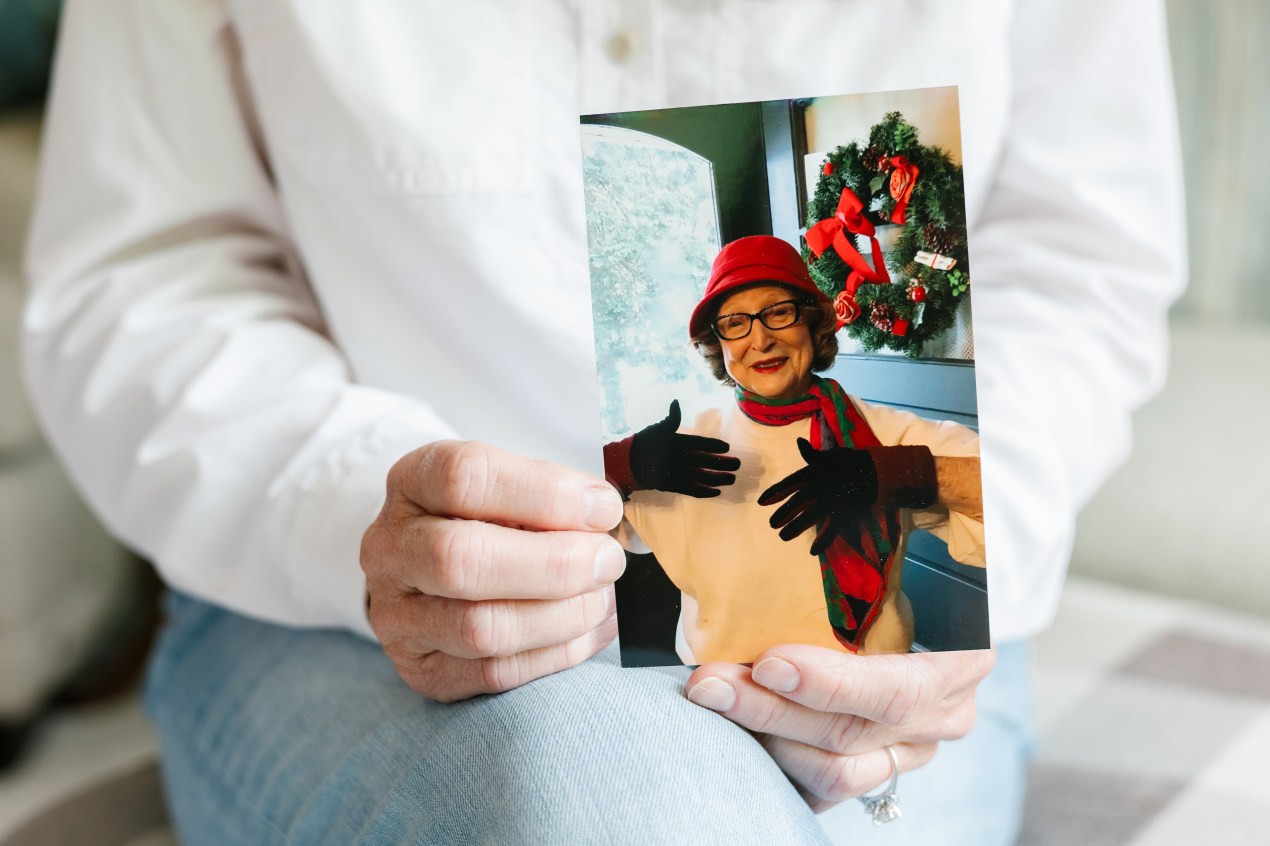
A woman wearing a white shirt holds a photo of a woman wearing black gloves, a red hat and a red and green scarf
A Minnesota investigative report determined Gladys Lynch’s memory care home failed to protect her from another resident known for behaving aggressively. “My mom deserved better than what they gave her,” says her daughter Rebecca Norton, seen here holding a photo of Lynch. The home has asked the state to reconsider its findings. (Liam James Doyle for KFF Health News)

Unknown to Norton, Harbor aides had raised concerns about the other resident, who like Lynch was new to Harbor Crossing’s memory unit, according to a Minnesota Department of Health report. Diagnosed with Alzheimer’s, severe dementia with agitation, depression, and anxiety, the woman was confused, had difficulty communicating her needs, and hit aides.

Aides repeatedly reported that the woman had “ongoing aggression, entered other residents’ apartments, invaded others’ personal space, and was difficult to redirect,” the health report said. They said medications had been ineffective and pressed for new ones. The report said one nurse told the woman’s doctor it was “only a matter of time before” she “hurts another resident.”

Captured on Camera

On the last day of September, she entered Lynch’s room and resisted leaving, the state report said. The next morning, she reappeared. Video of the incident was described in the police and state reports and reviewed by KFF Health News. It shows Lynch guided the woman out and appeared to attempt to lock the door, but the woman opened it and returned once more.

The woman declared it was her house, went into Lynch’s bathroom, used the toilet, and then returned to the room Lynch was in. Lynch can be seen repeatedly pressing the alert pendant around her neck to signal nurses for help.

The video shows the woman was almost out of her apartment door when she attempted to touch an object near the door. Lynch put her hands up to block her. The woman slapped at her hands and said, “I’m going to kill you if you don’t quit it.” She pushed Lynch, who fell, her head hitting the floor and blood seeping out.

Aides arrived 13 minutes after she had initially pressed her pendant, the state report said. Lynch suffered a brain hemorrhage and fractures to her eye socket and ribs, according to the state report. She died in the hospital five days later at age 96; the medical examiner’s office declared it a homicide.

Norton said her mother was kind and pleasant and never combative. “My mom deserved better than what they gave her,” she said.

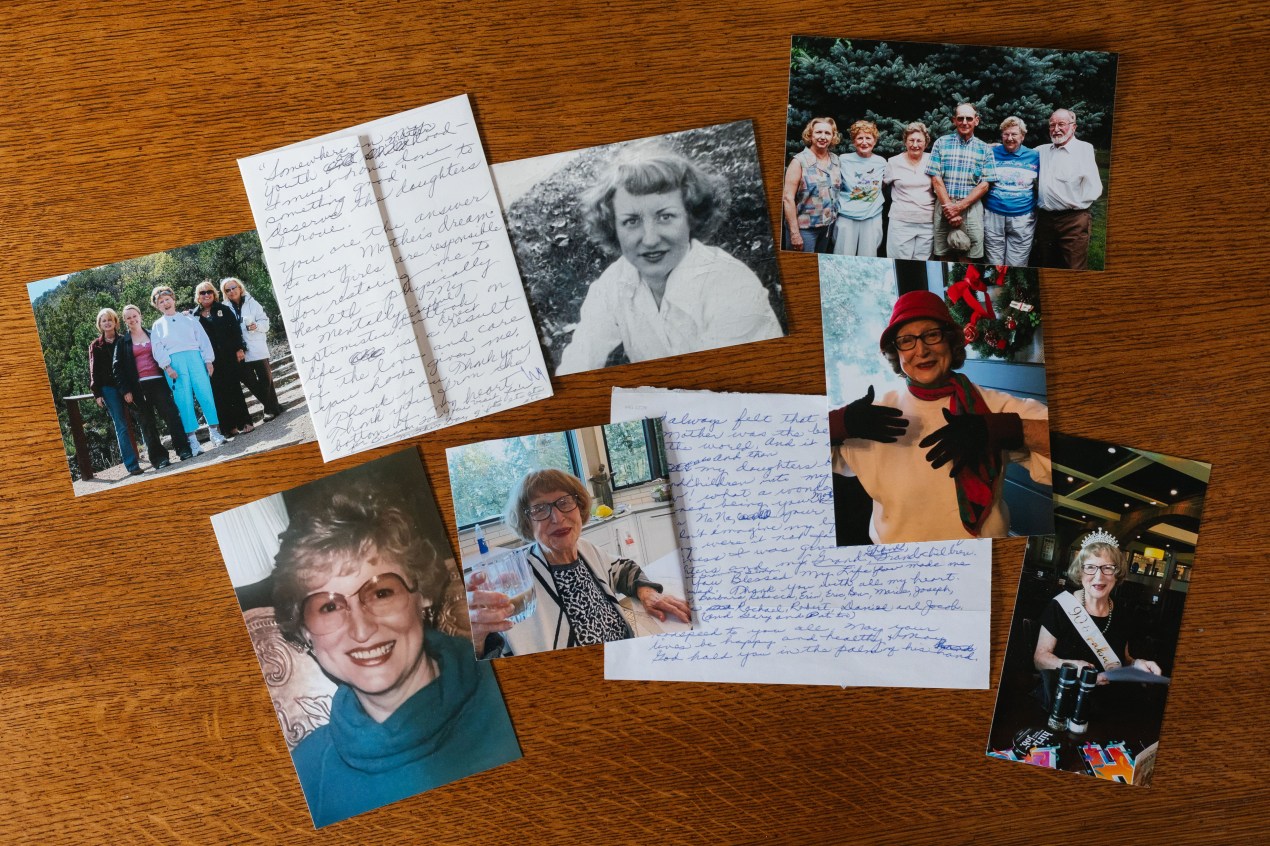
Photos and handwritten notes are displayed on a tabletop
Gladys Lynch was a department store accountant and raised three daughters before developing dementia. Here her daughter Rebecca Norton shows a collection of Lynch’s personal letters and photographs at Norton’s home in Hugo, Minnesota. (Liam James Doyle for KFF Health News)

Prosecutors declined to bring charges, according to the police report. The state investigation concluded Harbor Crossing was responsible for neglect because it was aware the woman “exhibited violent and aggressive behaviors” and yet had failed to put in place effective interventions. Harbor Crossing has requested the state reconsider its findings.

In June, Suzanne Scheller, the attorney for Lynch’s family, filed a wrongful death lawsuit against Presbyterian Homes, which owns Harbor Crossing.

Presbyterian said in a statement: “We are deeply saddened by the loss of Ms. Lynch, and our thoughts remain with her family and all those impacted.” It declined to comment further on the incident or the lawsuit.

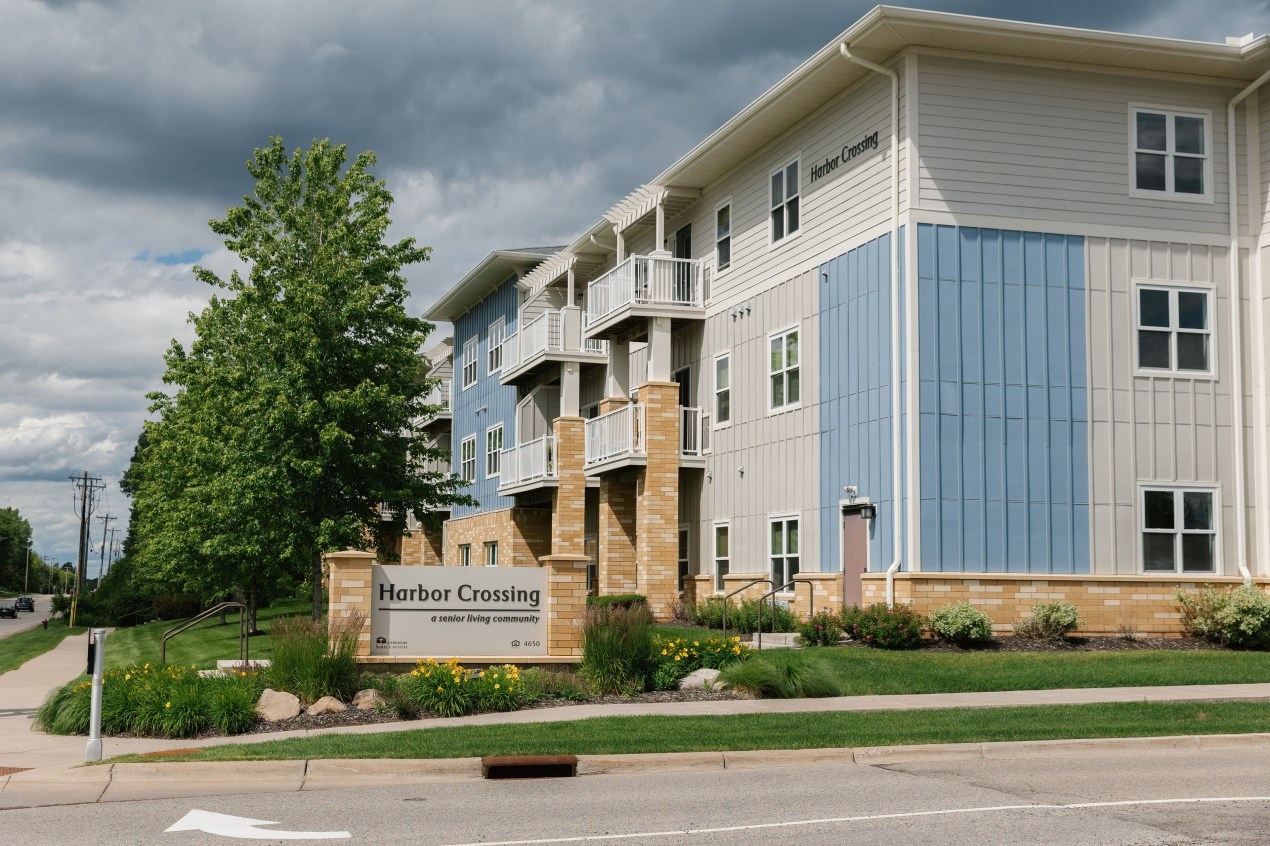
An image of the exterior of a three-story building, with a sign that says "Harbor Crossing"
Before Gladys Lynch’s death, employees at the memory care unit at Harbor Crossing in White Bear Lake, Minnesota, struggled to keep the resident who fatally assaulted her from behaving aggressively and wandering into other residents’ rooms, a state report found. Harbor Crossing has asked the state to reconsider its findings of negligence. (Liam James Doyle for KFF Health News)

Preventive Tactics

Geriatricians, researchers, and resident advocates say long-term care homes should employ strategies to reduce the risk of altercations, including closer supervision of residents at high risk, relocating them closer to nursing stations, separating residents with repeated conflicts, and adjusting roommate assignments or seating in shared spaces.

Each resident should have a care plan, and homes should train staff to be alert to a resident’s triggers and intervene quickly, dementia specialists say. Organized activities are essential to keep residents occupied and engaged. Antipsychotics and other psychotropic medications are often prescribed, but they can increase the risk of falls, strokes, and even death.

An aide can be assigned to watch a particularly challenging resident one-on-one, but many places lack enough staff for protracted, dedicated supervision. Some assisted living facilities will tell a resident’s family they must hire a personal aide, who can cost thousands of dollars extra each month. In extreme situations, facilities might send a resident to an emergency room for evaluation or to a psychiatric hospital, or evict or discharge them.

Camille Russell, who served as Kansas’ long-term care ombudsman until 2024, said she observed nurses and aides were often “woefully undertrained” in basic elements of dementia care.

“We’ve gotten too far away from making decisions that are caring decisions,” Russell said. “There has to be a balance, and the balance has gotten too far to the profit side.”

A Debilitating Kick

Many physical altercations between residents result in a scratch or a bruise, but nonfatal scraps can leave permanent damage on deeply frail residents.

Linda Twiddy’s first weeks in a Chesapeake, Virginia, memory care unit in August 2024 were happy, her daughter, Barbara Howerin, said in a May interview. Twiddy, a former church secretary with vascular dementia, sang along with a visiting church choir, decorated pumpkins, and visited a cat cafe. The facility, The Vero at Chesapeake, charged Twiddy a one-time $6,825 move-in fee and monthly charges of $7,475, according to the lease.

Seven weeks after Twiddy started living there, a nurse called Howerin. She told her that her mother had been kicked in an altercation with another resident and was being sent to the hospital.

When Howerin arrived at the hospital, she was shocked by the extent of the injury. “It was like 10 inches long by 6 inches wide, the whole front of her shin,” she said. “The calf was just like dangling down.”

According to an internal facility incident report the family obtained, an aide heard Twiddy scream for help and raced over to see a male resident with dementia trying to hit Twiddy as she sat on the floor in “a pool of blood.” The report said, “Linda was screaming get him away from me, he pushed and kicked me.”

The man had prior episodes of aggression, according to documents Twiddy’s family obtained in a lawsuit they brought against The Vero in Chesapeake Circuit Court. At his previous facility, a progress note from 2023 stated, he was “becoming very aggressive in tone and actions to residents and staff.” He “grabbed another resident by the wrists and pushed her,” according to the note. He was sent to an emergency room for evaluation of agitation, according to a hospital report. It did not make clear whether he was discharged back to the facility or elsewhere.

Agitation Tied to Pain

The male resident’s medical records at The Vero said he was diagnosed with late-onset Alzheimer’s disease, agitation, and anxiety, according to his doctor’s deposition. He had chronic pain in his back and trouble sleeping. He could answer simple yes-or-no questions but had trouble providing more extensive answers and couldn’t communicate that he was in pain, she testified. His behavioral changes usually occurred when he had a urinary tract infection, the doctor said.

When he was agitated, aides could sometimes calm him by turning on the television so he could watch his beloved New England Patriots, one aide testified in a deposition. A former aide said she tried to avoid dealing with him altogether. “If you go up to him and he was agitated, he’d reach out to try to grab you,” she testified. “If he had that cane, he would swing that cane or he would punch at you.”

In a court filing, The Vero denied allegations by Twiddy’s family that it should have protected residents from him. The filing said The Vero complied with all standards of care and that any injuries Twiddy sustained “were caused by her own negligence” or acts of others.

In their investigation of the incident, Virginia regulators alleged The Vero had failed to assume responsibility for the health, safety, and well-being of its residents. The inspection report said The Vero pledged to appropriately staff the memory care unit based on the number of residents and to ensure someone completed rounds at least every two hours during sleeping hours.

Twiddy underwent three surgeries at the hospital for her leg, including a skin graft, then spent a month in rehabilitation. “She was never able to walk again,” her son, Doug Twiddy, said in a May interview.

The family moved Linda Twiddy to a different memory care facility where the nursing station had a clear view of all the rooms. She lived there until her death earlier this year.

The lawsuit was settled on confidential terms in early June. Carlton Bennett, the family’s attorney, declined to comment. In an email, Lauren Rogers, a spokesperson for Sinceri Senior Living, which operates The Vero, said the company was pleased the legal case had been resolved but could not comment further, citing confidentiality and patient privacy.

“The Vero at Chesapeake is committed to providing a caring, supportive environment where resident health, safety, and well-being remain our highest priorities,” she said.

A History of Violence

After Attilio Cecchetto was fatally bludgeoned at Sunrise Post Acute, his adult children and their attorney, Jody Moore, discovered disturbing details about Sam Ato Timaloa. He had been imprisoned in 1999 after being convicted of raping an underage girl and sentenced in 2008 to 24 years in prison for attempted murder involving domestic violence, according to Riverside County court records. His public defender declined to comment.

Cecchetto’s sons, Moore, and her colleagues at Moore Hutchins Moore also learned more about the home’s owner, PACS Group, a publicly traded company with more than 300 long-term care facilities. Last year, PACS earned $191 million on revenue of $5.3 billion, according to its annual securities filing.

In the lawsuit the Cecchettos and their father’s widow filed against PACS, they accused the company’s founders, Jason Murray and Mark Hancock, of draining resources from their nursing homes to pay for the chain’s expansion and swell their personal wealth.

The two had earned more than $650 million through stock sales since taking the company public and bought two private luxury jets, according to the lawsuit and securities filings. PACS has also purchased corporate sponsorships for Utah sports teams even though it owns no nursing homes in the state, the lawsuit said.

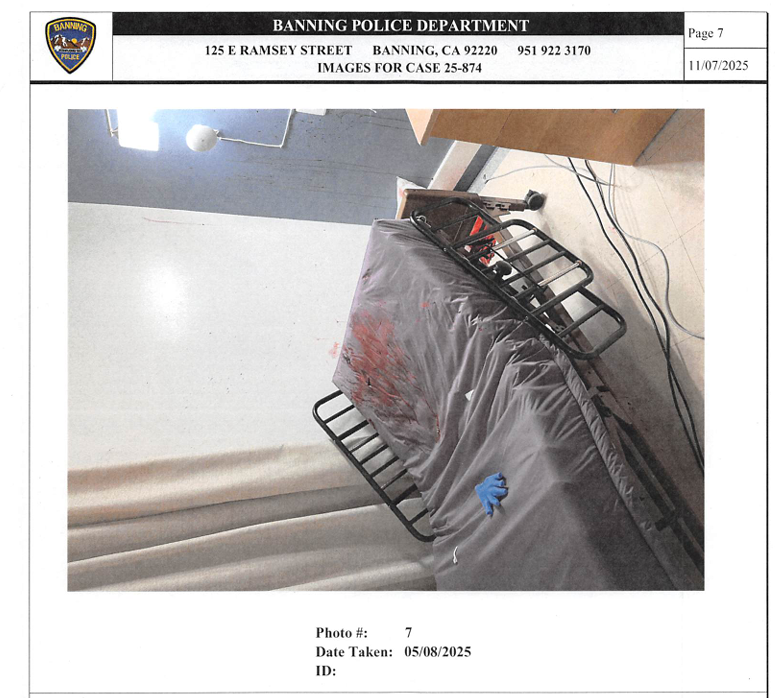
A gurney with blood and a blue medical glove on the mattress
Attilio Cecchetto was allegedly beaten by his roommate at a California nursing home. Police photographed Cecchetto’s bed after he was taken to a hospital. He died two days later. (Banning Police Department)

California regulators fined Sunrise $120,000 for failing to protect Cecchetto and for not taking Timaloa’s articulated dislike of noise into account when assigning rooms. Medicare issued its own $62,810 fine.

In legal papers responding to the Cecchettos’ lawsuit, PACS denied negligence for his death and alleged he “failed to exercise ordinary care on his own behalf for his own safety.” It has sued to overturn the $120,000 state fine, saying it was issued too late and that Sunrise “did what might reasonably be expected of a long-term health care facility licensee acting under similar circumstances” to comply with state rules.

The Cecchettos’ lawsuit asks for a judge to impose robust procedures PACS homes must follow for admissions, staff training, room changes, and the reporting of altercations between residents. The suit asks for a court-appointed monitor to oversee compliance. In its written statement to KFF Health News, PACS said “important context” would come out during the process and declined further comment.

In an interview, Cecchetto’s three sons, Dino, Gino, and Marco Cecchetto, described their father’s life. He spent his childhood on a farm in Italy, growing up under Benito Mussolini. After World War II he moved to Canada, where he learned to tile and lay marble and terrazzo, a decorative flooring material made of chips of stone, glass, or other materials embedded in cement or resin. He relocated to California in the early 1960s, became naturalized, and worked as a tile journeyman and a contractor for decades.

“We don’t want this to happen to somebody again,” Gino Cecchetto said. “With the life he led, he deserved a quiet, dignified death. Instead, he ended his life in pain and fear.”

Data Methodology

KFF Health News’ analysis of federal nursing home inspection reports focused on citations for violations of Medicare and Medicaid regulations stating that each resident has the right to be free of abuse, neglect, and exploitation.

The analysis looked at the most serious levels of citations, those in which inspectors determined that one or more residents had been harmed, or that the facility’s actions caused – or were likely to place residents in immediate jeopardy of – serious injury, harm, impairment, or death. We reviewed the reports since January 2024 and tallied those that explicitly described resident-to-resident altercations.

We conducted a more granular analysis of a subset of the inspection reports from January through March 2026 involving harm or immediate jeopardy. Each report was reviewed and categorized by the type of abuse, neglect, or exploitation.

KFF Health News is a national newsroom that produces in-depth journalism about health issues and is one of the core operating programs at KFF-an independent source of health policy research, polling, and journalism. Learn more about KFF.

This <a target="_blank" href="https://kffhealthnews.org/health-industry/dementia-violence-assaults-nursing-homes-assisted-living-california-minnesota-virginia/”>article</a&gt; first appeared on <a target="_blank" href="https://kffhealthnews.org”>KFF Health News and is republished here under a <a target="_blank" href="https://creativecommons.org/licenses/by-nc-nd/4.0/”>Creative Commons Attribution-NonCommercial-NoDerivatives 4.0 International License.<img src="https://kffhealthnews.org/wp-content/uploads/sites/8/2023/04/kffhealthnews-icon.png?w=150&quot; style=”width:1em;height:1em;margin-left:10px;”>

<img id="republication-tracker-tool-source" src="https://kffhealthnews.org/?republication-pixel=true&post=2257718&ga4=G-J74WWTKFM0&quot; style=”width:1px;height:1px;”>

  • « Previous Page
  • Page 1
  • Page 2
  • Page 3

Primary Sidebar

Recent Posts

  • TEST Post test hotfix TEST
  • “TEST Post test hotfix TEST”
  • TEST Post test hotfix TEST
  • TEST Post test hotfix TEST by Mark
  • TEST Post test hotfix TEST

Language Select

  • Home
  • News Releases
  • Ask a Question
  • Eval Notifications
  • Computer Asset Survey
  • Sean Response
  • Taxonomies Test
  • Dynamic Incident Template test

© 2026. Powered by JettyThis Site Uses Google TranslateManage My Subscriptions

We use cookies to ensure that we give you the best experience on our website. If you continue to use this site we will assume that you are happy with it.